
Why HR Should Be Thinking About Advertising Differently
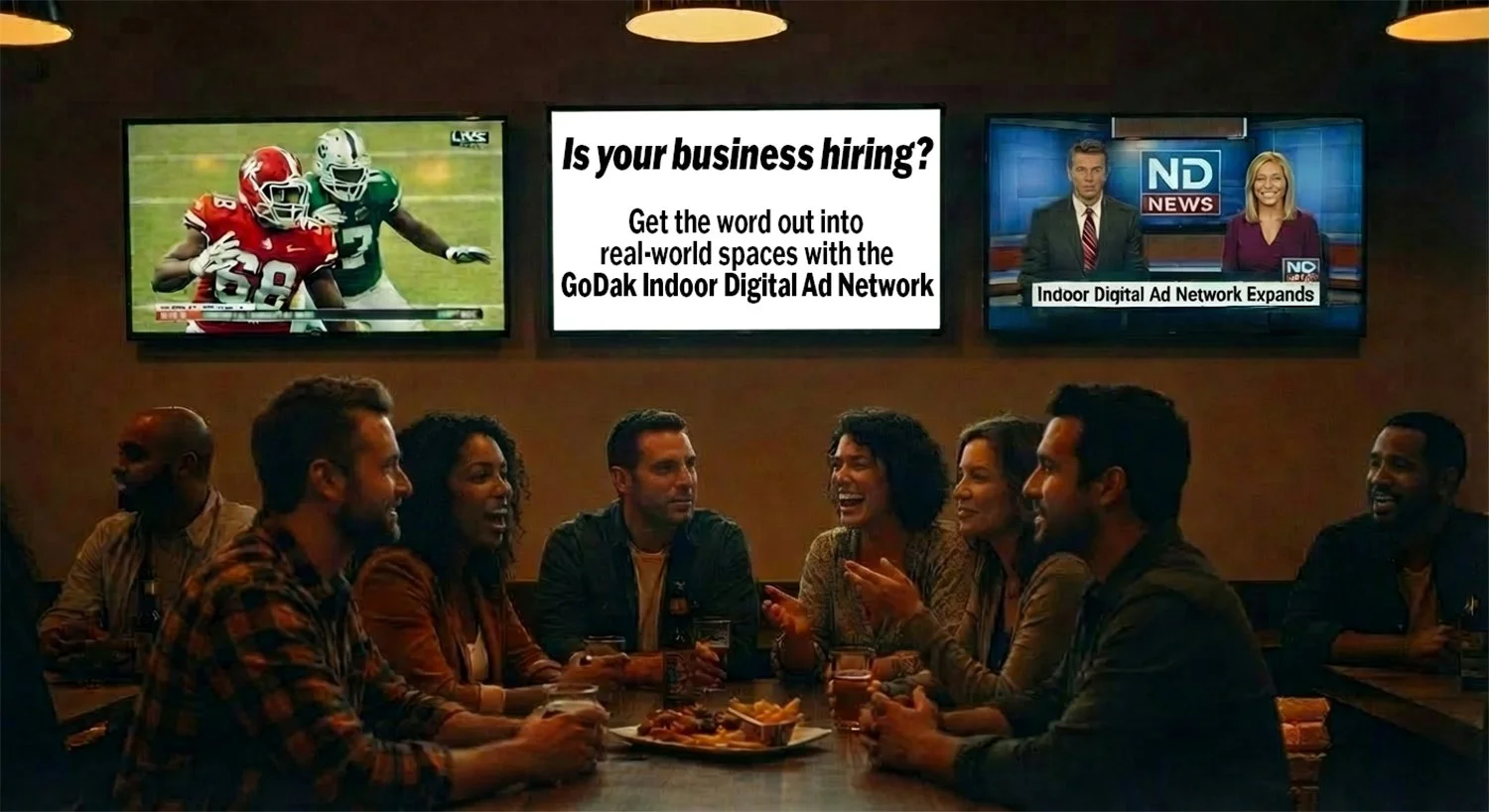
Get your message in front of people who just might know who your next employee is, before you do.
When most people hear the word advertising, they immediately think marketing. Products. Promotions. Sales.
That framing alone causes many HR teams to tune out.
But advertising isn’t always about directly selling a product or promoting an event. At its core, it’s a form of active communication. It centers on communicating something to someone. And sometimes, that someone isn’t a customer at all—it might be your next employee.
When you look at advertising through that lens—especially local, indoor digital billboard advertising like we offer at GoDak—it becomes just as relevant to HR as it is to marketing.
When Hiring Is a Continuous Process, Not a Campaign
For many organizations today, hiring isn’t seasonal or occasional—it’s ongoing. Positions open, close, and reopen. Some roles are always in demand, while others appear unexpectedly.
This creates a familiar challenge for HR:
Job boards are reactive
Social posts are short-lived
Recruiting efforts spike, then go quiet
What HR really needs is a steady, always-on way to communicate:
We’re hiring. We’re growing. We’re a great place to work.
That message doesn’t need to be complex—but it does need to be visible.
“We’re Hiring” Is More Than a Job Posting
A hiring message isn’t only meant for someone actively looking for a job.
In reality, some of the most effective recruiting happens indirectly.
When a hiring message appears on the GoDak Indoor Digital Signage Network, it reaches:
People who may not be actively job hunting
Individuals connected to potential candidates through family, friends, and community
HR isn’t just speaking to candidates. It’s communicating with the network around them.
At the same time, that message quietly reinforces:
Company stability
Growth and momentum
Culture and values
Community presence
That’s employer branding—whether it’s labeled that way or not.
A Passive, Local Recruiting Tool for HR
The GoDak Indoor Digital Ad Network gives HR teams something they rarely have: a passive, local recruiting channel.
Unlike job ads that rely on someone actively searching, GoDak places hiring messages in front of people during their normal routines—inside locations they already visit and trust.
This allows HR to:
Keep hiring messages live over time
Promote multiple roles without constant reposting
Maintain visibility even during slower hiring periods
Over time, this creates familiarity:
“I keep seeing them—they must be a solid place to work.”
That kind of awareness compounds.
When Hiring Is Slow, Seasonal, or As-Needed: HR and Marketing Can Align
For organizations where hiring is seasonal or role-specific, this is where HR and marketing can work together.
When hiring demand is high:
Screens focus on open roles, benefits, and workplace culture
When hiring slows:
Messaging shifts to employer branding and community involvement
When a new position opens:
Content switches quickly—without rebuilding an entire campaign
This flexibility gives HR control over hiring communication while allowing marketing to reinforce brand reputation at the same time.
More Than Filling Open Positions
The real value for HR goes beyond immediate recruiting needs.
Using a local indoor digital signage network helps HR:
Build long-term candidate pipelines
Strengthen employer branding
Increase referral awareness
Reinforce a company’s presence in the community
It turns hiring from a series of short-term pushes into an ongoing conversation.
And importantly, it does this in a way that’s accessible and cost-effective. Indoor digital advertising doesn’t require massive budgets or long-term commitments—it’s designed to be flexible, scalable, and affordable for organizations of all sizes.
Because hiring isn’t just about filling roles. It’s about consistently communicating who you are—to the people who matter most.
If you’re looking for a practical, affordable way to get your hiring message in front of your local community, contact GoDak and let’s start the conversation.